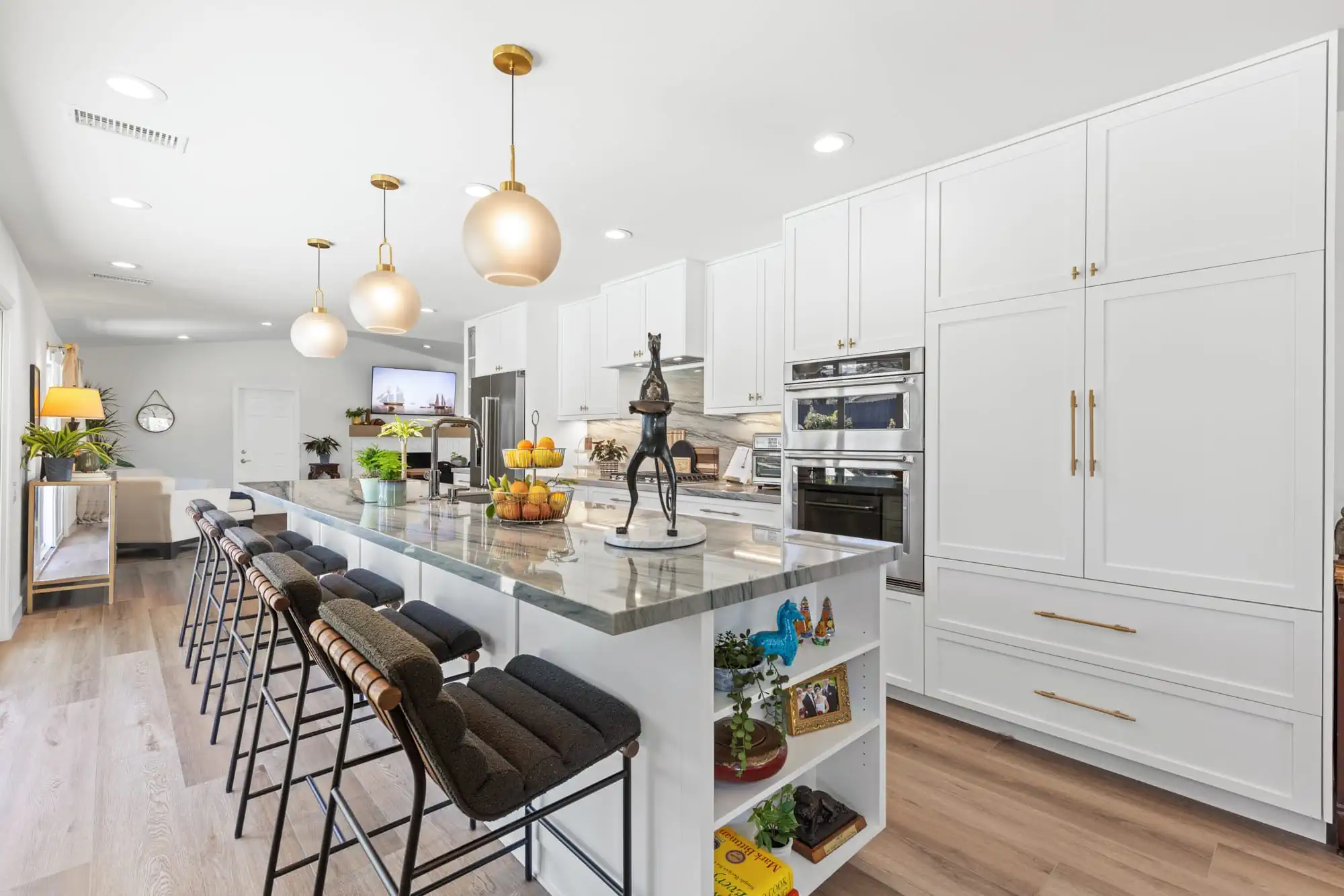
How To Pick The Right Finishes for Coastal Living: A So-Cal Remodeling Guide

Compared to inland homes, coastal properties in Southern California deal with a very different set of challenges. Salt air, moisture, and constant sun exposure all take a toll on materials over time. Based on our experience across similar projects, this guide covers what actually holds up and what doesn’t.

Best Types of Finishes for Coastal Living Remodels

Salt air is one of the biggest issues. It can cause metals to corrode quickly, break down adhesives, and degrade most paints and coatings faster than expected.

Finishes that last longer in coastal conditions tend to have a few things in common:

●       Non-porous or very low porosity

●       Resistant to moisture absorption

●       Some degree of UV resistance built in

For interior surfaces, look at porcelain tile, quartz, and sealed concrete. These materials don’t absorb moisture the way natural stone or unsealed wood can. For exterior surfaces, fiber cement siding, stucco with elastomeric finishes, and marine-grade paints are your best bets.

Think about every finish as a system. One weak link (say, uncoated metal hinges) can undo an otherwise solid renovation.

Best Paint Types for Coastal Home Exteriors

Standard latex paint doesn’t hold up well near the ocean. Salt finds microscopic imperfections in the film and starts breaking it down within a couple of years.

Elastomeric paint is the top choice for most SoCal coastal exteriors. It’s considerably thicker than conventional paint and flexes with temperature swings instead of cracking. It also bridges hairline cracks in stucco, which matters a lot on older homes. Sherwin-Williams Conflex is a reliable option worth asking about.

100% acrylic paint is a step down but still solid. Look for products specifically labeled for marine or coastal use. Benjamin Moore’s Aura Exterior holds up well in moderate coastal exposure.

A few things to avoid:

●       Alkyd (oil-based) paints on exteriors, unless you’re working with bare wood trim that needs primer penetration. They’re slower to dry and don’t handle moisture cycling well long-term.

●       Dark colors where you can help it. Darker pigments absorb more UV and tend to fade or chalk faster.

How to Choose Durable Finishes for Beach House Interiors

Inside a coastal home, the issues shift a bit. There’s still humidity and salt tracking in from feet and clothing, but direct sun exposure becomes the bigger concern in rooms with west or south-facing glass.

Walls: Moisture-resistant drywall (sometimes called “green board” or the newer purple board) is worth specifying in bathrooms, laundry rooms, and anywhere adjacent to exterior walls that see condensation. Pair it with a semi-gloss or satin paint. Flat finishes absorb moisture and are harder to clean.

Cabinetry: Solid wood cabinets sound appealing but they expand and contract with humidity. That eventually warps doors and cracks finishes at the joints. Thermofoil or PVC-wrapped MDF holds up much better. For real wood, quarter-sawn cuts are more dimensionally stable, and a catalyzed conversion varnish finish is worth the upgrade over standard lacquer.

Hardware: Brushed nickel corrodes faster than most people expect near saltwater. Better options:

●       Brushed 316 marine-grade stainless steel

●       Oil-rubbed bronze with a solid lacquer coating

Which Finishes Prevent Mold and Mildew in Coastal Remodels

Mold prevention isn’t really about one product. It’s about cutting off the conditions that let mold grow. Start by controlling moisture, then choose finishes that don’t give mold a place to grow.

Some products do a better job than others:

●       Mold-inhibiting paint: Zinsser Perma-White is a good example. Any paint mixed with a mildewcide additive creates a surface that’s harder to colonize. Worth using in bathrooms, closets, and rooms with limited ventilation.

●       Epoxy grout: Standard sanded grout is porous and stains easily. It’s worth using epoxy grout (Laticrete SpectraLOCK is a solid choice) in showers and anywhere moisture is constant. Harder to install but significantly reduces the chances of mold in grout lines.

●       PVC trim instead of wood: Wood baseboard and window trim in coastal bathrooms is a mistake. It absorbs moisture, swells, and eventually grows mold behind the paint. PVC looks identical once painted and absorbs nothing.

●       Proper ventilation: No finish compensates for a bathroom running at 80% humidity year-round. Size exhaust fans at a minimum of 1 CFM per square foot and wire them to a humidity sensor rather than a manual switch.

Durable Flooring Options for Beach House Remodels

This is one area where a lot of homeowners make expensive mistakes. Hardwood floors look great but they’re genuinely problematic within a block or two of the water. Even engineered hardwood can delaminate or cup when humidity swings get significant.

What works well:

●       Porcelain tile is the gold standard. Dense, non-porous, and essentially immune to humidity and salt. Large-format tiles (24″x24″ or bigger) have fewer grout lines, which means less to seal and less chance of moisture getting in. Wood-look porcelain has gotten convincingly realistic in the last several years.

●       Luxury vinyl plank (LVP) is a strong second choice, especially in bedrooms and living areas where tile feels too hard underfoot. Look for a wear layer of at least 20 mils. COREtec and Shaw both make good coastal-appropriate lines. Make sure the product is labeled 100% waterproof, not just water-resistant.

●       Sealed concrete works well in open-plan homes. Re-seal every few years and it handles moisture, sand, and heavy traffic without much complaint.

What to avoid:

●       Carpet (holds moisture and salt)

●       Traditional hardwood

●       Any flooring with cork or fiber underlayment that can harbor mold

Top Finish Materials Suitable for Humid Coastal Environments

Humidity affects almost every material eventually, but some handle it far better than others. These are the ones that tend to perform consistently in coastal conditions:

Quartz composite: Non-porous and needs essentially no sealing. Engineered quartz (Silestone and Caesarstone are common brands) works well for countertops, backsplashes, or accent walls. Natural granite and marble require annual sealing and will stain and etch if neglected. That becomes a real burden in a high-traffic or vacation beach house.

Fiber cement siding: James Hardie is the dominant brand. Resistant to moisture, salt air, insects, and fire. Factory-primed and painted with elastomeric or 100% acrylic coatings. Maintenance intervals are much longer than wood siding.

316 stainless steel hardware: Any exposed metal (door handles, hinges, cabinet pulls, towel bars) should be 316 stainless in salt-air environments. The more common 304 stainless can still develop rust spots over time near the ocean. It’s a detail that gets overlooked a lot.

Composite decking: Trex and TimberTech both eliminate the maintenance demands of wood and hold up well to UV and moisture. Earlier versions had surface mold issues, but most current products have closed-cell structures that resist it.

Countertop Materials Resistant to Salt Air Corrosion

The countertop surface itself usually isn’t where salt air causes damage. The trouble spots are the edges, sink cutout, and metal components like faucet trim and drain hardware. Some materials simply perform better in coastal kitchens and bathrooms.

Quartz: Worth repeating from the section above. Engineered quartz is the most maintenance-free countertop option for coastal homes. No sealing, no etching from acidic cleaners, and holds up well to humidity.

Porcelain slabs: A newer option that’s gaining traction. Large-format porcelain panels used as countertop surfaces instead of tile. Thinner than quartz (usually around 12mm), completely non-porous, and resistant to heat and UV. A good pick if you have a counter near windows or skylights.

Solid surface (Corian-type): Less glamorous but practical. Non-porous, repairable if scratched, and no seams to harbor moisture. Works well for utility spaces, laundry rooms, or sheltered outdoor kitchen counters.

What to avoid:

●       Unsealed marble in high-use coastal kitchens. The etching from acidic foods is frustrating enough without salt air adding to the maintenance load.

●       Butcher block near the water, unless you’re very consistent about sealing and drying it.

Lighting Fixtures Suitable for Oceanfront Properties

Lighting is one of the most commonly under-specified categories in coastal remodels. Homeowners pick fixtures based on looks and then wonder why they’re corroding within a year.

For exterior fixtures, start with anything rated UL Listed for Wet Locations. That’s the baseline. If you’re within a quarter mile of the ocean, it’s worth stepping up to 316 stainless steel or solid brass. Aluminum tends to corrode over time in coastal environments, even when anodized.

Look for fixtures with an IP44 or IP65 rating, which indicates how well they resist water.

A few other things worth knowing:

●       On coastal patios with exposed decorative or Edison-style bulb fixtures, specify porcelain sockets. They hold up better than standard phenolic sockets in humid conditions.

●       LED fixtures are better suited to coastal environments overall. They run cooler, produce less condensation inside the housing, and last longer. That matters because every time you open a fixture to swap a bulb, you’re giving salt and moisture a chance to get in.

Eco-Friendly Finish Products for a Coastal Remodel

Many coastal homeowners also look for more environmentally responsible options. The good news is some eco-friendly options actually hold up well in these conditions.

Low-VOC and zero-VOC paints: Most major brands now offer low-VOC formulas that perform comparably to conventional paints. ECOS Paints is a good option built specifically around low emissions. One caveat: some low-VOC paints sacrifice mildew resistance, so check the spec sheet before assuming the eco version matches the standard formula.

Recycled content flooring: Several LVP lines from Shaw incorporate recycled content. For tile, look for recycled glass options. Oceanside Glass Tile makes nice products and is California-based.

Natural oil wood finishes: For wood outside high-moisture zones (interior doors, ceiling beams, furniture), natural oil finishes like Rubio Monocoat or Osmo Polyx-Oil are biodegradable, low-VOC, and penetrate the wood instead of sitting on top as a film that can crack and peel. They need reapplication more often, but spot repairs are easy.

FSC-certified lumber: If you’re using wood framing, trim, or decking, FSC certification confirms responsible sourcing. Worth specifying with your contractor from the start.

How to Protect Interior Finishes from Salt and Humidity

Even with the right materials, maintenance is part of coastal home ownership. These habits make a real difference over time.

Control indoor humidity. A whole-house dehumidifier (or at minimum a quality unit for the bedroom and main living area) keeps relative humidity below 60%, which is the threshold where mold growth becomes likely. Humidity spikes in SoCal coastal climates are most common late spring through summer. A basic hygrometer is cheap and worth keeping around.

Wipe down hardware regularly. Salt deposits on door handles, faucets, and cabinet pulls are inevitable. A weekly wipe-down with a damp cloth then a dry one keeps salt from etching into the surface. A light coat of paste wax on exterior hardware every few months helps too.

Seal grout on a schedule. Even epoxy grout benefits from an annual check. For traditional cement-based grout, reseal annually with a penetrating silicone sealer. Aqua Mix Sealer’s Choice Gold is a reliable product for this.

Inspect window and door seals. Salt air finds its way through failing weatherstripping faster than you’d think. Check annually and replace deteriorating foam or rubber before moisture gets into the wall cavity.

Ventilate after storms. Ocean storms push salt-laden air into every gap. Run exhaust fans and open interior doors after a storm to dry things out. Avoid leaving windows cracked during heavy onshore winds.

Repaint exterior on a schedule. Even with elastomeric paint, plan on repainting every 7-10 years. Waiting until it’s visibly failing usually means moisture has already penetrated. Check caulk joints, window flashings, and trim during your annual walkthrough.

Getting the finishes right in a coastal home isn’t about finding one miracle product. It’s about understanding what each material is up against and making smart choices from the start. If you focus on durability, moisture resistance, and how much upkeep things need, you’ll avoid most of the common issues we see in coastal home renovations. These are the finishes that consistently hold up in real coastal conditions, not just in theory, but over time.

Share Now
Facebook
Twitter
LinkedIn